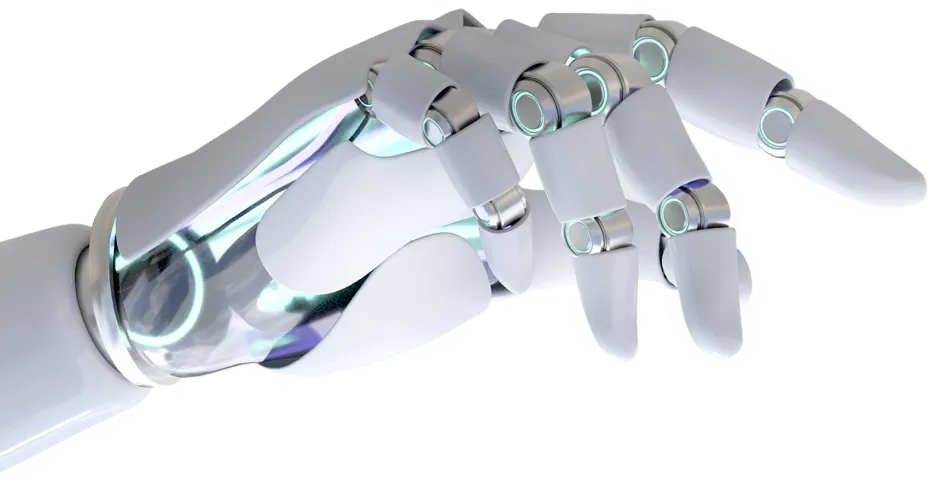
AIaaS, where human limitations meet the infinite potential of AI-Agents
Existing solution audit
Data science and assessment
ROI analysis
AIaaS Tech Innovation Ecosystem Shaping the Future with AI Precision and Ethical Excellence
We’re not just another AI company; we specialize in solving niche business challenges through the powerful fusion of behavioral science, marketing, and AI. Transform your business with unparalleled precision and insight.
AI Innovation Hub
Crafting specialized AI agents and pioneering advanced technologies.
Smart Data Hub
Powering AI with impeccable data quality and seamless integration.
ML R&D
Fueling continuous AI advancement and intelligent evolution.
AI Ethics & Governance
Ensuring AI integrity, transparency, and responsible development.
AI refers to the development of computer systems that can perform tasks typically requiring human intelligence. These tasks include learning, reasoning, problem-solving, perception, and language understanding.
How does AI differ from AGI (Artificial General Intelligence)?
While AI refers to systems designed to perform specific tasks, AGI refers to a type of AI that possesses the ability to understand, learn, and apply knowledge across a wide range of tasks, much like a human being.
What are AI-Agents?
AI-Agents are autonomous systems designed to perform specific tasks or functions. They can interact with their environment, make decisions, and execute actions to achieve predetermined goals.
How are AI-Agents used in practical applications?
AI-Agents are used in various applications, including customer service (chatbots), autonomous vehicles, personalized recommendations, and robotic process automation (RPA) in business operations.
Can AI-Agents learn and adapt over time?
Yes, many AI-Agents are designed to learn from their interactions and adapt to new information, improving their performance and decision-making abilities over time.
What is Multimodal AI?
Multimodal AI refers to systems that can process and integrate multiple types of data (e.g., text, images, audio) simultaneously. These systems can understand and generate responses that consider multiple forms of input, enabling richer and more context-aware interactions.
What are Multi-Agent Systems?
Multi-Agent Systems involve multiple AI-Agents working together to solve complex tasks. These agents can collaborate, communicate, and even compete, making them useful in scenarios that require decentralized problem-solving and decision-making.
What are the ethical considerations related to AI and AGI?
Ethical considerations include the potential for job displacement, privacy concerns, decision-making transparency, and the risk of creating systems that might behave unpredictably if not properly controlled.
How does AI impact data privacy?
AI systems often rely on vast amounts of data to function effectively. Ensuring data privacy involves implementing strict data governance policies and using techniques like anonymization and encryption.
What is the role of AGI in the future of AI development?
AGI represents the long-term goal for AI researchers, aiming to create systems that can perform any intellectual task a human can. It could revolutionize fields like healthcare, education, and scientific research.
How can businesses benefit from deploying Multi-Agent Systems?
Businesses can use Multi-Agent Systems to handle complex, distributed tasks that require coordination among various autonomous agents. These systems are particularly useful in logistics, supply chain management, and large-scale simulations.
What is the current state of AGI development?
AGI remains largely theoretical, with ongoing research aimed at understanding and replicating the full range of human cognitive abilities. Current AI systems are still far from achieving true AGI.